
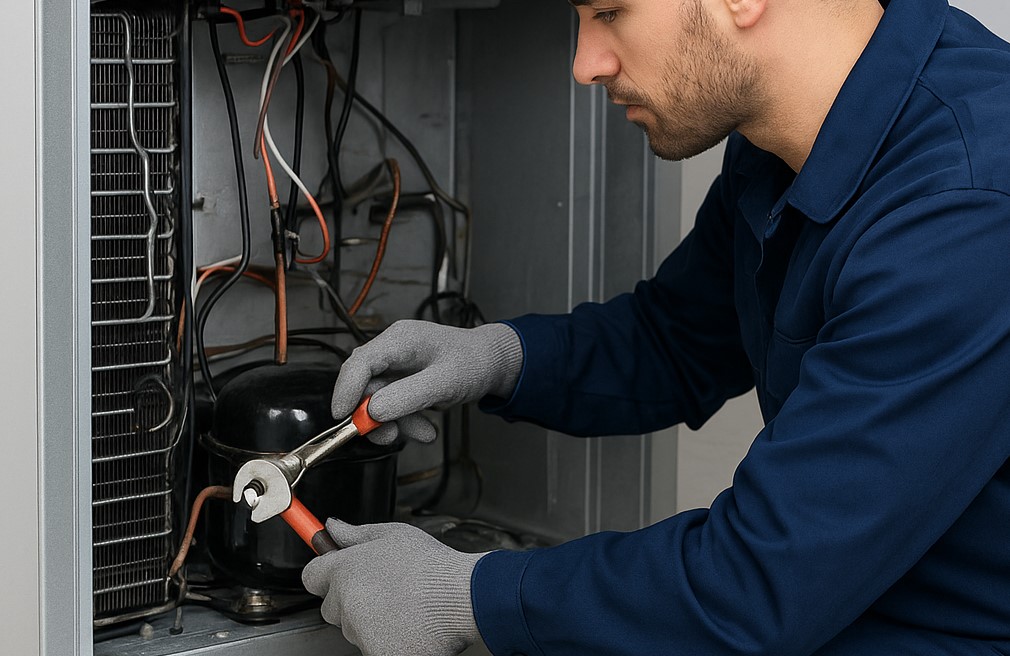
How to repair home ac is one of the most common questions Florida homeowners ask when their system suddenly stops cooling in the middle of a hot afternoon. Let’s cut to the chase: some issues are simple and safe to check yourself. Others need a licensed professional. Knowing the difference can save you time, money, and a lot of sweat.
Key Takeaways
- Some AC problems (like dirty filters or tripped breakers) are safe and easy to fix.
- Electrical and refrigerant issues should always be handled by licensed technicians.
- Regular maintenance prevents most emergency breakdowns.
- Florida’s heat and humidity put extra strain on AC systems.
- Professional service protects your warranty and keeps your system efficient.
At Air Mavericks, a family-owned air-conditioning company in Largo, Fl., we’ve seen everything — frozen-up coils, clogged drains, blown capacitors and thermostats that just needed new batteries. And before you reach for tools and start removing panels, here’s what really matters and what you should do first.
Step 1: Start With the Thermostat
It’s an obvious point, but one that solves more problems than you’d imagine.
Here’s what you should do:
- Make sure it’s set to “Cool.”
- Lower the temperature at least 3–5 degrees below room temp
- If the screen appears dim or blank, replace batteries.
- See if it is operating in programmable mode with a schedule conflict.
If the AC still doesn’t come on, go to the breaker panel.
Step 2: Check the Circuit Breaker
Sometimes the problem isn’t the AC, it’s the power.
Look for:
Tripped breaker labeled “AC” or “HVAC.”
A disconnect box near the outdoor unit that could have blown a fuse.
Reset the breaker once. If the trip is repeated, break there. Tripping repeatedly often indicates an electrical problem, and that is not a do-it-yourself situation.
Step 3: Check and Replace/Clean the Air Filter
Clogged air filters slow down the airflow. Low air flow causes frozen coils. Frozen coils mean no cooling.
In Florida, particularly in places like Largo and throughout Pinellas, Hillsborough and Manatee Counties, filters should be inspected monthly.
This is what you should do:
- Turn off the system.
- Remove the old filter.
- Replace it with new which should indicate the direction of airflow.
If airflow gets better but cooling doesn’t, read on.
Step 4: Inspect for a Frozen Evaporator Coil
If your AC is running but blowing hot air, the coil could be frozen.
Signs include:
- Ice buildup on copper lines
- Weak airflow from vents
- Water pooling around the unit
Turn off the system and allow it to thaw for a number of hours. Replace the filter if dirty. “Beyond that, if it freezes up again then you’ve got a more serious problem like low refrigerant or a blower motor issue,” he explained.
By this point, a lot of homeowners Googling how to fix home ac know that the repair goes further than troubleshooting. Refrigerant handling requires EPA certification. It’s not something you want to do yourself.
Step 5: Check the Outdoor Condenser Unit
Step outside and take a look at your condenser.
Check for:
- Leaves or debris blocking airflow
- Dirt buildup on coils
- Loud buzzing or rattling sounds
You may blow off debris gently (first turn off the power). But if the unit buzzes and won’t run, it’s most likely either a failed capacitor or type of contactor. These components contain high voltage and can be dangerous to handle without training.
That’s when it’s wise to contact professionals like Air Mavericks. Our experts have the right tools to find and fix the problem, adhering to safety standards.
Step 6: Check the Drain Line
In Florida humidity, your AC extracts a great deal of moisture. That moisture is drained through a condensate line. If it gets clogged, the system can turn itself off.
Signs of a clogged drain:
- Water near the indoor unit
- Musty smell
- AC shutting off unexpectedly
You can attempt to flush the line with a wet/dry vacuum. If it continues to clog, there might be algae buildup further down the system.
When to Call It Quits on DIY Repairs
Here’s the honest truth: Not every repair is worth making yourself.
Call in a pro if you see:
- Burning smells
- Loud metal-on-metal noises
- Refrigerant leaks
- Repeated breaker trips
- Complete system shutdown
Without proper training, attempts to repair major AC components can not only nullify warranties but can also lead to bigger damages.
See our up-front pricing — no guesswork from Air Mavericks. If it is a small fix, we will let you know. If the system’s on its last leg we’ll break down your options with no pressure.
Why are AC Repairs Not The Same in Florida?
AC units run almost year-round in places like Florida. That ongoing demand adds wear to:
- Capacitors
- Compressors
- Fan motors
- Coils
Elevated humidity increases the chance of mold accumulation or drain line clogs, too.
That’s why maintenance matters. The majority of emergency repairs, however, could have been avoided with regular servicing.
If you’re looking up how to repair home ac, it may actually be a sign that professional maintenance would be more effective than reactive fixes.

When to Repair or Replace
Here’s a basic rule of thumb that many homeowners follow:
Under 10 years old, have reasonable repair costs → Repair it.
For the 12–15+ years old, expensive parts needed → Replacement may be better.
Modern systems are more energy-efficient. Lower utility bills can help pay installation costs over time.
Air Mavericks offers energy-efficient AC installations and stands behind their competitive pricing on new systems. Instead of simply narrowing the focus on the repair bill that was to be immediately incurred, our team assists you with long-term comparative savings.
Prevent Future AC Problems
Here’s what to do next:
- Replace filters monthly
- Schedule annual maintenance
- Keep outdoor units clear
- Install a surge protector
- Pay attention to unusual sounds
Staying in a state of health is more affordable than urgent care. Always.
The Case For Professional Repair (Even If You Can Do It Yourself)
After Googling how to fix home ac it is easy to keep searching and trying all the suggestions on the internet. But here’s the thing: AC systems are complex machines full of electrical components, refrigerant chemistry and mechanical bits.
Professional technicians:
- Diagnose problems faster
- Have the correct replacement parts
- Follow safety standards
- Protect your system warranty
With same-day service, Saturday appointments, and a satisfaction guarantee, Air Mavericks can have experienced technicians at your Largo and other county home in no time! We arrive on time and get it done the first time.
Trustworthy AC Assistance Largo, FL
But if you’ve been reading up on how to repair home ac, you now know which fixes are simple and which require the expertise of a professional. Some problems require just a simple DIY check. Others call for trained technicians to prevent further damage.
For forthright advice, clear pricing and speedy service, rely on Air Mavericks — the leading heating and cooling squad in Largo servicing Pinellas, Hillsborough and Manatee Counties.
Call Air Mavericks today to schedule your AC repair or maintenance service and keep your Florida home cool and comfortable.
Frequently Asked Questions
1. Can I repair my home AC myself?
You can handle simple tasks like replacing filters or resetting breakers. Electrical or refrigerant repairs should always be done by a licensed technician.
2. Why is my AC running but not cooling?
Common causes include dirty filters, low refrigerant, frozen coils, or compressor issues.
3. How much does AC repair usually cost in Florida?
Minor repairs may cost a few hundred dollars. Major component replacements can be higher. A professional inspection gives accurate pricing.
4. How often should I service my AC in Florida?
At least once per year. Many Florida homeowners benefit from twice-yearly maintenance due to heavy usage.
5. What are signs my AC needs professional repair?
Strange noises, warm air, high energy bills, leaks, and frequent cycling are strong indicators.