
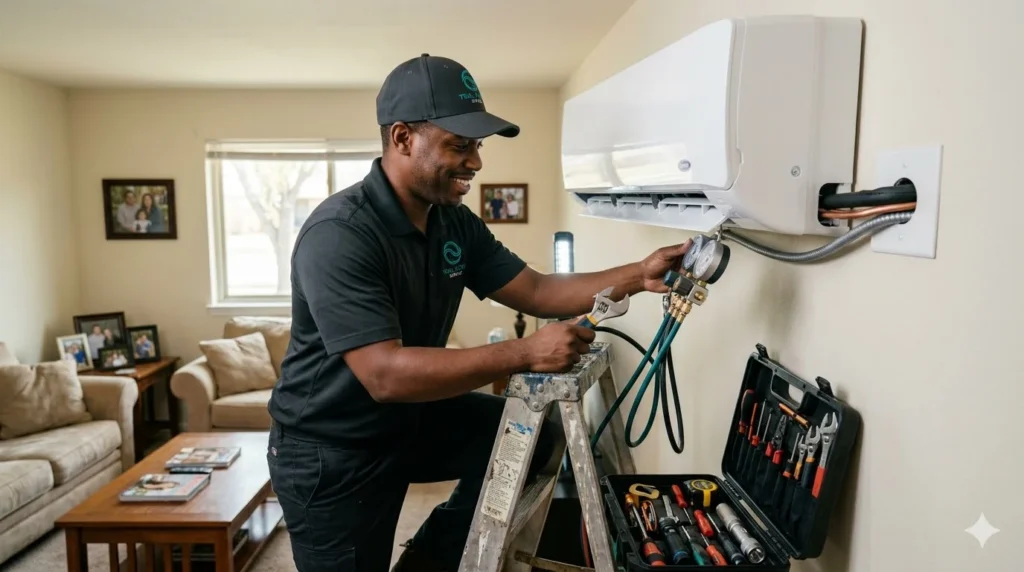
Look, HVAC repair in Largo, FL, isn’t just a part-swap. It’s a grind. Air Mavericks don’t just slap a capacitor in and vanish. Florida humidity is brutal. The salt air eats copper for breakfast. A real tech digs into the diagnostics first. We find the “why” behind the failure. We test. We scrub. We verify the circuit. If the air isn’t crisp when we leave, the job isn’t done.
Key Takeaways
- Start with the numbers by checking subcooling and superheating immediately.
- Scrub the salt off the condenser fins to stop metal pitting.
- Pull the service disconnect to safely ohm out the compressor windings.
- Blow the drain lines with CO2 to clear out that Florida “slime.”
- Check the static pressure to see if your ductwork is choking the blower.
What Does a Professional HVAC Repair Visit Include From Start to Finish?
Don’t settle for a “splash and dash” tech. Largo heat demands a deep dive into the guts of the machine.
Here is the grit of a real service call:
1. System Diagnostics & Performance Testing
The tech starts at the thermostat. We listen for the contractor click. We measure the “split”—that’s the temp drop across the coil. In Pinellas County, we hunt for weak components early. A dying capacitor is the usual suspect in an HVAC repair in Largo, FL.
2. Full Component Inspection
We pull the panels. We check the blower wheel for balance. We look at the evaporator coil for pinhole leaks. Salt air is a silent killer here. We check every electrical terminal for corrosion. If it looks “crusty,” it’s going to fail.
3. Cleaning & Airflow Optimization
Dirt kills airflows. We hit the coils with a foaming cleaner. We blast the drain pan. If you’ve lived through a Largo summer, you know about algae backups. We kill the growth before it floods your hallway.
4. On-the-Spot Repairs & Part Replacement
We don’t wait. We swap the fan motor or the contactor right there. We check the duct boots, too. No sense fixing the AC if your cold air is leaking into a 140°F attic.
5. Final Testing & Homeowner Guidance
We fire it up. We let it run under a full load. You get a straight-talk report. No fluff. Just what we fixed, why it broke, and how to keep it running.
Why Do HVAC Systems in Largo, FL Fail More Often in Coastal Climates?
Florida is a torture test for metal. In Largo, your AC is a workhorse. It runs 300+ days a year.
Humidity forces longer cycles. That burns out motors. Salt air acts like sandpaper on the coils. It causes “pitting” and leaks. Then the afternoon storms hit. Power surges fry the control boards. It’s a constant battle.
Common stress factors include:
- Manage the humidity by ensuring the unit stays in the “dehumidify” sweet spot.
- Fight the salt that turns aluminum fins into white powder.
- Clear the storm debris, like pine needles that choke the condenser air.
- Survive the long haul since these units never get a winter break.
- Stop the algae from triggering your emergency float switch.
Small issues turn into $5,000 failures fast.
How Do Technicians Diagnose Refrigerant and Electrical Problems?
Electrical gremlins are common for HVAC repair in Largo, FL.
We don’t just “add gas.” That’s a rookie move. If it’s low, it’s leaking. We use electronic sniffers to find the hole. On the electrical side, we check the heartbeat.
Electrical testing focuses on:
- Check the microfarads on the run capacitor to ensure a smooth start.
- Look for pitted points on the contactor that cause “sticking.”
- Monitor the amp draw on the compressor to see if it’s dragging.
- Inspect the wire nuts for heat damage or rodent bites.
- Test the lugs at the breaker to prevent a fire hazard.
One $150 part today saves a $3,000 compressor tomorrow.
What Role Do Coil Cleaning and Drain Line Clearing Play in Repairs?
Dust is the enemy. In Florida, dust turns into mud inside your unit.
If the coil is choked, it can’t breathe. Your electric bill goes up. Your house stays humid. We use a high-pressure flush on the lines. We want that water moving out, not backing up into your ceiling.
During a repair, we’ll often:
- De-grease the outdoor fins to dump the heat faster.
- Vacuum the drain line to remove the “jelly” buildup.
- Sanitize the pan to kill mold spores before they hit your lungs.
- Balance the blower so the unit doesn’t vibrate itself apart.
- Seal the air handler to stop sucking in hot attic air.
It’s about air volume. If the air can’t move, the house won’t cool.
What Happens After the Repair Is Completed?
Air Mavericks don’t just pack up when the air gets cold.
After the HVAC repair in Largo, FL, we run a final stress test. We check the refrigerant pressures one last time. We want to see a stable “delta T” across the house.
Before we leave, you get:
- The “No-BS” report on what actually happened.
- Maintenance hacks tailored to our coastal zip code.
- The “health check” on how much life is left in the system.
- Efficiency tips to keep Duke Energy out of your pockets.
- The clean-up is because we don’t leave a mess in your home.
We build trust with transparency. You’ll know exactly where your system stands.
Conclusion
Largo heat is no joke. You need a tech who knows the local grit. Don’t settle for a “handyman” fix. You need a solution that lasts through the humidity.
If your unit is struggling or short-cycling, act now. Don’t wait for the total breakdown. Call Air Mavericks today to get your home cool again. Get the professional HVAC repair in Largo, FL you actually deserve.
Frequently Asked Questions
How long does a typical HVAC repair take in Largo, FL?
Usually an hour or two. A motor swap is quick. A leak search takes longer. We stay until the pressures are stable.
Is HVAC repair in Largo, FL, more expensive because of the coastal climate?
The parts cost the same. The labor is the same. But the salt damage is worse. You’ll replace parts here twice as often as someone in Georgia.
What are the signs I need professional HVAC repair instead of maintenance?
If it’s making a “clunk” or “screech,” call us. If the bill spikes, call us. Maintenance is for prevention. Repairs are for failures.
Can high humidity cause my AC to break down?
Yes. It forces the unit to run 20-hour days. That heat kills capacitors and fan motors. It also fills your drain lines with slime.
Should I turn off my system before a technician arrives?
If you smell burning or see water, hit the breaker. If it’s just not cooling, leave it on. We need to see it fail to fix it.