
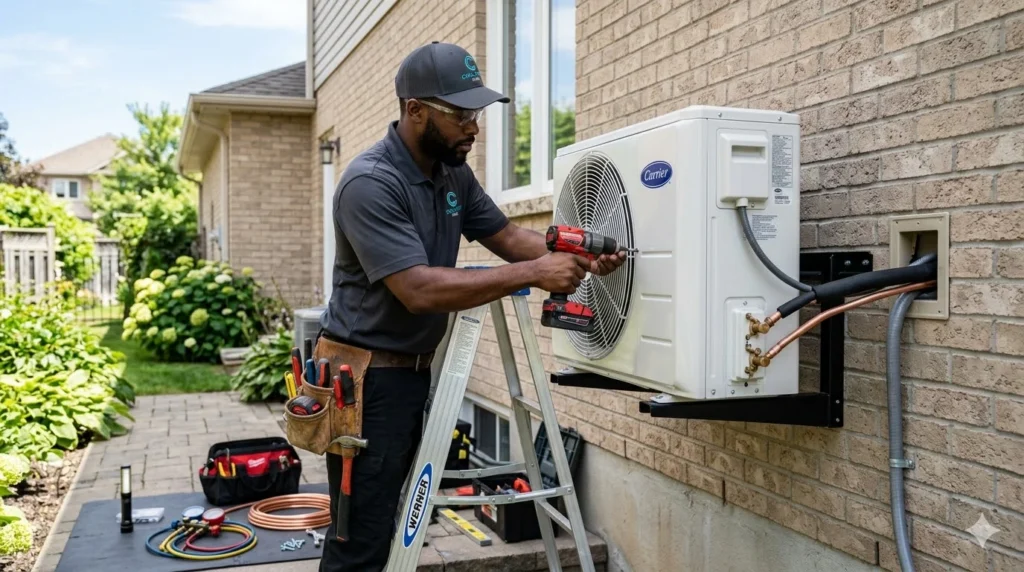
How to install HVAC system is a question many homeowners ask when planning a new construction project or replacing an aging heating and cooling unit. While it may seem like a straightforward process, HVAC installation involves electrical work, duct design, refrigerant handling, airflow calculations, and local code compliance. That’s why many Belleair homeowners trust Air Mavericks for professional installation that delivers long-term comfort, efficiency, and reliability.
So long as your HVAC is installed correctly, that fact should make all the difference – lower energy bills, comfortable indoor climate control, and improved equipment longevity. Conversely, an improperly installed system can result in larger energy bills, cold and hot spots throughout the space, regular repairs and a shorter lifespan for your unit.
Key Takeaways
- HVAC installation involves much more than simply connecting equipment.
- Proper sizing is one of the most important factors for efficiency and comfort.
- Ductwork, airflow, and electrical connections must meet code requirements.
- DIY HVAC installation can create safety risks and costly mistakes.
- Professional installation helps maximize system performance and lifespan.
Why Proper HVAC Installation Matters
So, let us get right down to it: Even the best equipment can underperform if it’s not installed correctly.
Homeowners are often concerned about brand names and equipment ratings but very frequently, installation quality can play a bigger role in overall performance than the equipment itself. A big system will short cycle and waste energy, while a small system may leave you without enough cooling during the hottest months here in Florida.
But with months of high humidity and long cooling seasons in Belleair, installation is key.
Step 1: Heating And Cooling Requirements
Before every HVAC installation, experts carry out a load calculation.
This process evaluates:
- Home square footage
- Ceiling height
- Insulation levels
- Window size and placement
- Local climate conditions
- Number of occupants
- Heat-producing appliances
Which is to identify how much heating and cooling capacity your home needs.
Relying on rough estimates instead of conducting accurate calculations is the root cause of many installation problems, according to contractors. The precise system sizing is extremely important for comfort, efficiency & running costs and the team at Air Mavericks appreciate this.
Step 2: Choose the Right HVAC Systems
Knowing system requirements is one thing, choosing the right equipment is another.
Common HVAC options include:
Central Air Conditioning Systems
They continue to use ductwork to distribute cooled air throughout the home, and remain one of the most common options available in Belleair.
Heat Pumps
Heat pumps offer both heating and cooling from the same unit making heat pump systems especially a good choice for Floridia since we have relatively mild winters.
Ductless Mini-Split Systems
Best for: room additions, older homes & areas without ductwork
Hybrid Systems
They incorporate multiple technologies to aid effectiveness and comfort.
The equipment you choose will depend on the layout of your home, your energy goals and budget.
Step 3: Check or Add Up Ductwork
Ductwork is used to distribute conditioned air.
As for ductwork, which requires confirmation by technicians when replacing an existing HVAC system, it is checked for:
- Leaks
- Damage
- Poor insulation
- Airflow restrictions
- Mold or moisture issues
When it comes to new construction though, ductwork has to be meticulously designed for equal airflow through the home.
But what most people never learn is that leaky ducts can cut HVAC efficiency by over 25% and may double or triple monthly energy expenses.
Step 4: Clean the Surface
The area needs to be prepared ahead of equipment arriving.
This includes:
- Removing old equipment
- Verifying electrical service capacity
- Ensuring adequate clearance
- Checking drainage requirements
- Preparing mounting surfaces
This step is crucial for safety. HVAC systems consist of electrical parts, refrigerants, and large machinery that all need to be handled properly.
Step 5: Install Indoor Unit
Heat pump: The inside (or indoor) system is usually in a service room, attic, cabinet or other mechanical space.
Installation involves:
- Finding the right spot for your air handler (furnace)
- Securing the unit
- Connecting ductwork
- Installing drain lines
- Connecting electrical components
It is strategically placed to guarantee good access for maintenance as well as good airflow.
Stage 6: Add The Outside Condenser Unit
The outdoor condenser dissipates the heat from within your home.
Technicians must work gently to place the unit onto a stationary surface like:
- Concrete pads
- Composite equipment pads
- Raised mounting systems
The condenser should not obstruct in all directions; it is important to allow air through the various sides of this climate system, so that there are no overheating issues.
In DIY installations, a frequent blunder is the overpowering establishment of the condenser too near partitions, fences, or landscaping that will restrict efficiency.
Step 7: Connect Refrigerant Lines
Connecting The Indoor Unit and Outside Unit: Refrigerant Lines
This step includes:
- Running copper refrigerant tubing
- Brazing connections
- Pressure testing
- Vacuuming the system
- Charging refrigerant to manufacturer specifications
This is an area where it completely requires professional expertise. Both excess and deficient refrigerant will destroy efficiency, and ultimately can result in equipment failure.
Federal law prohibits non-professionals from obtaining or handling refrigerants.
Step 8: Complete Electrical Connections
All HVAC systems must have the electricity connected correctly.
This includes:
- Disconnect boxes
- Circuit breakers
- Thermostat wiring
- Equipment controls
- Safety switches
It’s important that electrical work follows the local building codes and manufacturers specifications.
Other Common Issues However, improper wiring can result in fire hazards, equipment damage, and safety risks.
Step 9: Install and Configure the Thermostat
Today, thermostats come loaded with control mechanisms that make it easier for homeowners to save energy.
Options include:
- Programmable thermostats
- Smart thermostats
- Wi-Fi-enabled controls
- Zoned comfort systems
Proper thermostat placement is important. If a thermostat is placed in full, direct sunlight, kitchens — or near anything else that produces heat — it can read the temperature incorrectly.
Step 10: Test and Commission the System
The last phase is thorough testing.
Technicians verify:
- Airflow performance
- Refrigerant pressures
- Electrical operation
- Temperature differentials
- Drainage function
- Thermostat communication
This process makes sure the system is working according to manufacturer specifications before installation can be marked as complete.
Air Mavericks performs extensive systems testing once the installation is complete, ensuring homeowners get maximum performance from day one.
Common Mistakes Homeowners Make
If you have done an online research, installing HVAC may seem super simple.
These a few the most common blunders:
Choosing the Wrong Size System
Bigger isn’t always better.
For these reasons, oversized systems often rapidly cycle on and off, wasting energy in effort to establish humidity control.
Ignoring Duct Issues
Unless you repair the damaged ductwork, replacing equipment is unlikely to achieve performance gains equivalent to design.
Improper Refrigerant Charging
Low refrigerant levels can dramatically impair the efficiency and longevity of the system.
Poor Equipment Placement
Placing an indoor or outdoor unit in an improper location may restrict the airflow and maintenance issue.
Skipping Permits and Inspections
The reason local code exists is that it was designed for a purpose. Not securing permits can lead to legal complications and hazards.
Why Professional HVAC Installation Is Worth It
This is what you should do if you’re considering a new HVAC system: focus on installation quality first.
Professional installation provides:
- Accurate system sizing
- Code compliance
- Manufacturer warranty protection
- Improved efficiency
- Longer equipment life
- Better indoor comfort
The initial outlay of expense is often alleviated by savings on utility bills and reduced maintenance over years.
HVAC Installation Considerations for Belleair Homes
Belleair presents specific climate challenges for HVAC equipment.
Equipment is subjected to additional harsh conditions such as high humidity, longer cooling seasons and exposure to salt-air along the coast.
These conditions means homeowners should target:
- Proper humidity control
- Corrosion-resistant components
- High-efficiency equipment
- Regular maintenance plans
- Professional installation practices
An application tailored to the conditions in Florida usually performs better than a generic solution.
Conclusion
Learning how to install the equipment that makes up an HVAC system can help homeowners understand the complexity involved in creating stable comfort inside their homes. The process involves load calculations, equipment selection, ductwork design, refrigerant connections, electrical work and system testing; every part of the whole is vital to the collective performance.
For homeowners in Belleair, professional installation remains the safest and most effective approach. Air Mavericks provides trusted HVAC installation services designed to maximize efficiency, comfort, and long-term reliability. If you’re planning a new HVAC installation or replacement, contact Air Mavericks today for expert guidance and a system designed specifically for your home’s needs.
Schedule your HVAC installation consultation with Air Mavericks today and enjoy dependable comfort, energy savings, and expert service you can trust.
Frequently Asked Questions
1. How long does it take to install an HVAC system?
Most residential HVAC installations take one to three days, depending on system complexity, ductwork requirements, and home size.
2. Can I install an HVAC system myself?
While some homeowners may attempt portions of the work, HVAC installation involves electrical systems, refrigerants, and code requirements that generally require professional expertise.
3. How much does HVAC installation cost in Belleair?
Costs vary based on equipment type, home size, ductwork needs, and efficiency ratings. A professional evaluation provides the most accurate estimate.
4. What size HVAC system do I need?
The correct size depends on load calculations that consider your home’s square footage, insulation, windows, and local climate conditions.
5. How often should a new HVAC system be serviced?
Most manufacturers recommend professional maintenance at least once or twice per year to maintain efficiency and warranty coverage.