
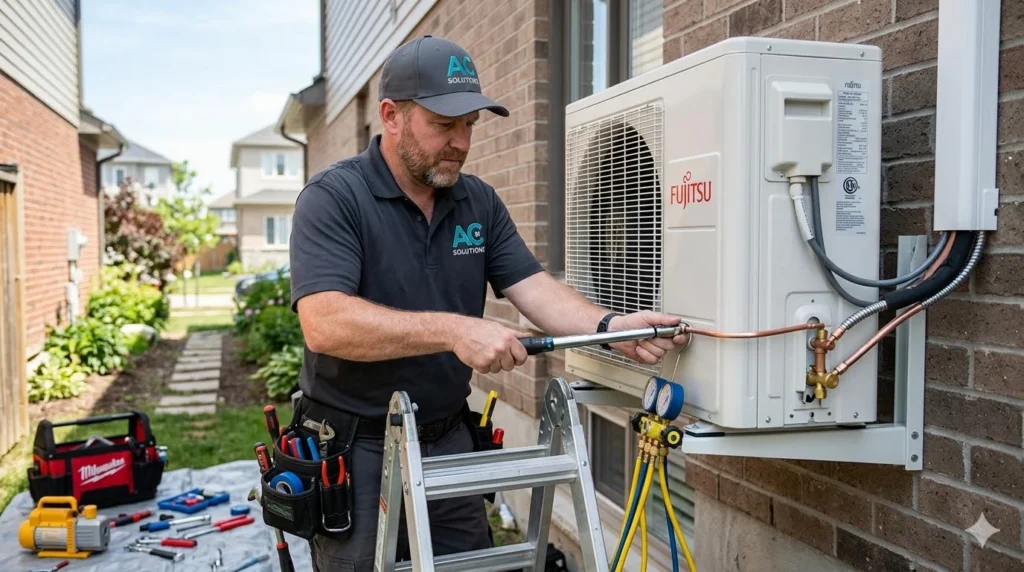
Seeing the price tag for a new cooling system often causes homeowners major sticker shock. Understanding why is AC replacement expensive compared to install in a brand-new home starts with realizing that technicians must remove old equipment from finished living spaces instead of working with an empty structure. That extra labor, planning, and system modification dramatically changes the scope of the project. Air Mavericks helps homeowners throughout Largo and surrounding Florida communities understand exactly where those costs come from so there are no surprises.
Many homeowners assume replacing an AC system is a simple plug-and-play job. In reality, it involves careful engineering, electrical evaluations, airflow testing, ductwork adjustments, refrigerant handling, and code compliance updates. Older homes may also require upgrades to support modern high-efficiency systems, adding another layer of labor and materials. This guide breaks down the hidden factors behind replacement costs so you can protect both your wallet and your home’s long-term comfort and safety.
Key Takeaways
- Accessibility Constraints: Retrofitting necessitates moving through completed walls or matured gardens, which drastically expands total work hours.
- Environmental Compliance: Safely capturing outdated refrigerants such as R-22 requires expensive recovery gear alongside steep disposal surcharges.
- Custom Fabrication: Modern units rarely align with historical ducting, forcing on-site metal modification to keep seals airtight.
- Safety Mandates: Swapping components triggers essential upgrades meeting current Florida Building Codes, including specific hurricane-rated anchors.
Why Does Retrofitting an Existing Home Cost More Than a New Build?
Operating inside the finalized boundaries of a Largo house adds substantial man-hours unlike open-stud construction. When building something new, contractors drop air handlers plus vents before drywall exists. During a swap, our crew at Air Mavericks navigate cramped attics, tight crawlspaces, or delicate ceilings while shielding expensive flooring.
Moving two-hundred-pound condensers past narrow gates without damaging mature landscaping requires immense precision. This cautious strategy utilizes additional staff to prevent property destruction, which inevitably increases the final bill.
New Install vs. Professional Replacement
Feature | New Construction Install | Residential Replacement |
Space Access | Open framing; no barriers | Finished interiors; cramped attics |
Fabrication | Standardized pre-cut pieces | Custom metal transitions |
Material Handling | Forklift reaches pad | Manual transit around gardens |
Regulatory Needs | One permit for construction | Mandatory code updates for houses |
Labor Profile | Repetitive high-speed work | Skilled protective craftsmanship |
What Is Involved in the Removal and Disposal of an Old AC System?
The teardown stage involves legal reclamation of toxic fluids alongside the physical hauling of massive steel parts. We do not simply discard used machinery; technicians must disconnect high-voltage wiring, drain volatile oils, and transport scrap to Belleair-compliant centers.
Clients pay for a complex logistical operation involving vehicle fees, recycling taxes, and heavy lifting aimed at preserving exterior siding. Such extraction steps are totally absent in fresh installations where teams begin with pristine concrete pads.
How Do Technical Integration and Custom Fabrication Impact the Price?
Modern high-efficiency machines utilize unique chassis dimensions plus digital communication protocols that seldom fit decade-old plenums. This technical gap serves as a primary reason why is ac replacement expensive compared to install because it dictates on-site specialized sheet metal shaping.
Experts must manually craft transition pieces linking indoor coils to the existing distribution box for 2026 SEER2 performance. Every minute spent at a manual brake or sealing joints with mastic represents skilled labor that standard new builds never require.
Why Does Code Compliance Trigger Extra Costs During a Replacement?
Updating hardware forces every part to satisfy contemporary Florida Building Codes which are much stricter than previous decades. Often, an electrician must wire new weather-tight disconnects or replace the mounting surface with a wind-rated platform.
Contractors explain why is AC replacement expensive compared to install by referencing these mandatory safety laws that safeguard warranties plus insurance. Neglecting local Largo ordinances leads to penalties or rejected storm damage claims later.
The AC Replacement Roadmap
Replacing your air conditioning usually requires a few steps that includes:
Phase 1: Site Hardening & Protection
- Spread industrial-grade floor coverings and plastic shields to defend your Belleair residence against metal debris.
- Pinpoint load-bearing locations for cranes or lifts to avoid fracturing driveways or hitting underground utility pipes.
Phase 2: Chemical Recovery & Decommissioning
- Use high-speed vacuum pumps to pull R-22 or R-410A liquids into certified cylinders.
- Deactivate the electrical grid while installing updated breakers matching the amperage needs of modern inverter-driven technology.
Phase 3: Custom Component Integration
- Build heavy-gauge metal connectors on-site to marry the air handler into the legacy duct trunk.
- Add vibration dampers plus secondary drain pans to stop future ceiling leaks or mechanical vibrations.
Phase 4: Risk Mitigation
- Property Defense: Utilizing specialized dollies plus plywood tracks to cross soggy Florida soil.
- Warranty Shielding: Verifying every weld undergoes nitrogen purging to inhibit internal oxidation plus compressor breakdown.
Phase 5: Technical Execution
- Line Set Flushing: Cleaning old copper tubes using chemical solvents to erase acidic grease residue.
- Sensor Calibration: Syncing smart thermostats to talk with variable-speed fan motors for humidity control.
Expert Perspective
Pro Tip: If an installer refuses to flow nitrogen while welding copper, they are essentially planting a ticking bomb into your cooling setup. Request to see the pressurized tank on their vehicle.
Ductwork Modifications and Airflow Optimization
Existing vents rarely match the airflow needs of high-efficiency equipment. Older properties within Pinellas County typically contain undersized channels that choke the massive volume of breezes modern blowers move. A fresh temperature controller will struggle or fail if ducting remains stagnant, causing frozen coils plus high electricity bills.
Specialists must examine the entire ventilation network for leaks or obstructions. The crew frequently reaches these passages through tiny gaps in scorching attics, sealing seams with mastic or replacing flattened areas. These alterations prevent machinery from burning out early due to high static pressure.
Proper circulation extends your investment’s lifespan while ensuring every room in your Belleair residence receives balanced cooling. This exhausting audit remains vital so the motor avoids working harder than necessary.
Need to Replace or Install an AC?
Buying a quality HVAC setup guarantees your home stays a sanctuary during peak Florida heat. While it is obvious why is AC replacement expensive compared to install for many residential sites, specialized expertise plus technical tweaks provide long-term ROI via lower utility bills. We prioritize precision setups plus clear pricing to increase property value and interior comfort.
Ready to protect your family’s well-being for the next decade? Call Air Mavericks at 727-431-5578 to book a comprehensive review of your cooling requirements.
Frequently Asked Questions
Q: Why do city permits cost so much in Florida?
A: City building departments collect fees to fund administrative reviews of safety blueprints and on-site inspections. These charges ensure your project meets wind-load rules plus electrical safety mandates, which is vital for keeping homeowner’s insurance.
Q: Can I reuse my old refrigerant copper lines?
A: You may only keep existing tubes if they are flushed and fit the diameter specs of the new machine. Most modern R-454B or R-32 equipment requires specific line sizes; using tiny copper will starve the compressor and cancel your warranty.
Q: How long does a standard residential replacement take?
A: Quality residential jobs usually demand eight to twelve hours of work for a two-person team. If your house needs extensive ductwork fixes or electrical upgrades to meet code, the project might continue into a second day.
Q: Will a high-efficiency unit actually pay for itself?
A: Modern SEER2 setups can slash monthly cooling expenses by thirty to fifty percent compared to ancient units. In the Largo environment, these power savings normally recover the initial price gap within five to seven years.
Q: Why do I need to replace my thermostat during a swap?
A: Older controllers lack the communication pins needed to operate variable-speed motors or dehumidification settings. To unlock the smart features and energy-saving logic of modern HVAC hardware, a matching digital interface is mandatory.