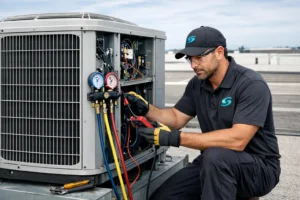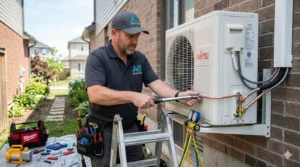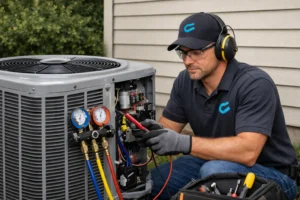
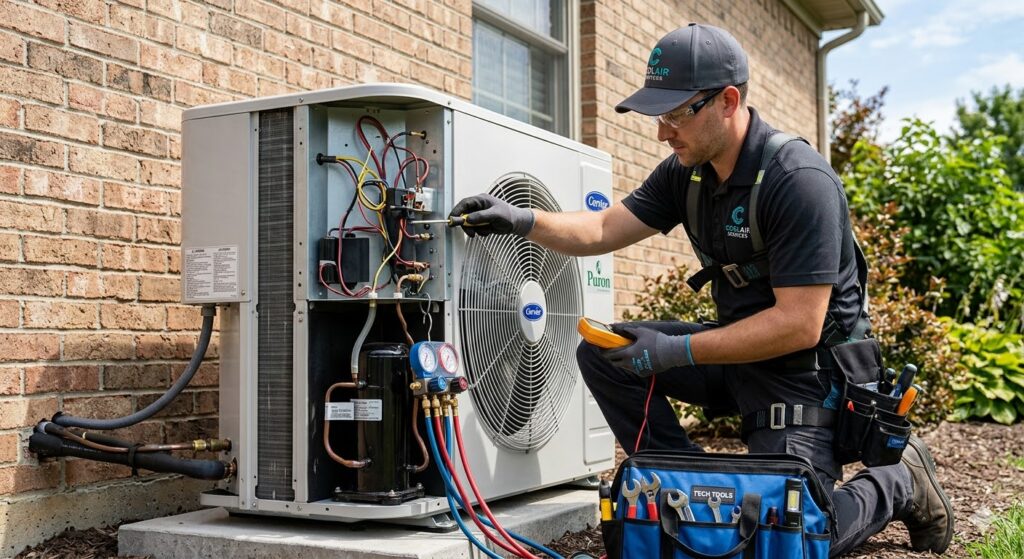
Air conditioning repair in Largo is often worth it, especially given the intense Florida heat, heavy humidity, and salty coastal air that constantly strain your system. With Air Mavericks, homeowners in Pinellas County get expert solutions for systems that run nearly year-round, which means parts wear out faster than in milder climates. The real question isn’t whether repairs are needed—it’s whether repairing now prevents a much more expensive breakdown later.
Key Takeaways
- Stop salt corrosion before it eats your aluminum fins and kills your pressure.
- Identify blown capacitors early to prevent motor burnout during a heatwave.
- Flush your drain lines to avoid algae clogs and indoor water damage.
- Repair beats replacement if your cabinet is solid and the compressor is still pumping.
- Lower your power bill by keeping the mechanical parts tight and friction-free.
Why Do So Many Homes Need Air Conditioning Repair in Largo?
Running an AC in Largo is tough on the hardware. It’s like driving a truck uphill 24/7. Between the Gulf salt, the humidity, and the lightning, your unit is fighting a war. If you’re calling a tech often, it’s not bad luck. It’s the environment.
Here is why local systems fail:
1. Coastal Corrosion Damages Coils
Salt air is a silent killer. It pits the copper. It turns aluminum fins into dust. Once the coils degrade, your efficiency drops. That’s when air conditioning repair in Largo becomes the only way to patch high-pressure leaks.
2. Heavy Year-Round Usage Wears Parts Faster
Up north, units rest in winter. Not here. Largo units grind for ten months straight. Blower motors and contactor points hit their “limit” much faster than the national average.
3. Failed Capacitors and Motors
The capacitor is the “starter” for your motor. In our heat, they bake. They swell up and pop. It’s the most common “no-cool” call we handle when the mercury hits 100 degrees.
4. Refrigerant Leaks Reduce Cooling Power
Low gas means a hot house. It forces the system to run double-time. This ices up the evaporator coil and can eventually “slug” the compressor. That’s a death sentence for the unit.
5. Electrical Issues From Storms
Pinellas is the lightning capital. Frequent surges fry the control boards. Even minor flickers melt wire nuts. A slow electrical burn eventually kills the power to the whole system.
In this climate, repairs are just part of owning a home.
How Do You Know If Repair Is Better Than Replacement?
Don’t panic over a $200 contactor. Not every breakdown means you need a new install. Look at the “bones” of the machine first.
Repair is the smart play if:
- Verify the age and make sure it’s under 10 years old.
- Check the math to see if the fix is under 40% of a new unit’s cost.
- Review the history to see if the previous owner actually changed the filters.
- Measure the cooling to ensure the temperature drop is still hitting the mark.
Replacement is the move if:
- Track the failures and notice you’re calling a tech every month.
- Assess the lifespan because 15 years is the max for a Florida unit.
- Evaluate the gas, especially if your old “Freon” system is leaking.
- Diagnose the compressor because a shorted compressor is rarely worth the labor.
Largo units work double shifts. A strategic repair can buy you three more years of comfort.
What Are the Most Common AC Problems in Largo Homes?
We see the same “usual suspects” on the truck every day. These aren’t glitches. They are symptoms of living near the Gulf.
Here is what we actually fix in the field:
- Replace weak capacitors that can’t handle the summer startup load.
- Clear out drain lines filled with thick algae slime from the humidity.
- Wash the salt out of the condenser coils to restore airflow.
- Find the leaks in the evaporator core using a halogen detector.
- Swap motor modules when high-static pressure burns out the fan.
- Tighten the electrical leads that loosened up from the heat.
Humidity is the biggest enemy. If that drain line isn’t clear, it trips the float switch. Your AC dies instantly to prevent a flood.
Dirty coils are another budget-killer. When salt and dust coat the fins, the heat stays trapped. Your electric meter spins like a top. Don’t ignore a surge, either. One strike turns a circuit board into charred plastic.
Can Regular Maintenance Prevent Expensive Repairs?
In Largo, maintenance is a requirement. If you ignore the unit, it will fail you when you need it most.
Preventive care finds the “weak link” before it snaps. We do this by:
- Checking the pressures to spot pinhole leaks early.
- Coating the coils to build a barrier against the salt air.
- Blasting the drain with CO2 to prevent a backup.
- Testing the capacitors to see if they are losing their charge.
- Checking the wiring after a heavy lightning storm.
What you need to do:
- Change the filters every 30 days during the summer.
- Clear the brush away from the outdoor unit.
- Book a pro tune-up at least once a year.
- Listen for buzzing and call it in before the part shatters.
A neglected system is a thirsty system. It drains your paycheck in utility costs and then quits in July.
How Does Largo’s Climate Affect Repair Costs?
The Florida environment makes everything harder. Salt air makes parts brittle. If we have to pull a motor out of a rusted bracket, the labor goes up. If the humidity caused mold in the ducting, you need specialized cleaning.
Catching it early keeps the bill low. If you ignore a “whistling” sound, you’ll end up with a burned-out compressor. That is the most expensive air conditioning repair in Largo you can face.
- Scrub corrosive buildup from aluminum fins to prevent “pitting” and high-pressure leaks.
- Inject UV dye to find micro-leaks caused by thermal expansion in the coils.
- Treat drain pans with biocide tablets to prevent algae growth in humid weather.
- Shield electrical ports against salt-air oxidation with dielectric grease.
Energy bills are the hidden cost. A struggling unit pulls more amps. That shows up on your Duke Energy bill fast. Repairing it now pays for itself with lower monthly overhead.
Does Fast Service Make a Difference in Florida Heat?
Timing is everything in Largo. When the AC dies, your house becomes a greenhouse. It’s not just about comfort. It’s about protecting your home.
If you wait for service, you risk:
- Inside temperatures are climbing past 85 degrees, which ruins electronics.
- Humidity spikes that warp wood floors and trigger mold.
- Cascading failures where one bad part kills three others.
- High mold risk in stagnant, hot air.
A same-day fix is the difference between a part swap and a total renovation. Don’t play around with the heat.
Conclusion
Getting an air conditioning repair in Largo is just part of living here. The salt and humidity are tough. But a proactive fix is always cheaper than a total collapse. With Air Mavericks, you get reliable, honest service that keeps your system running efficiently despite Florida’s harsh conditions. Addressing that weird noise today keeps your energy bills low.
Don’t sit there and sweat. Call (727) 435-1147 right now to get an expert tech on the job. Let Air Mavericks get your air conditioning repair in Largo handled so you can stay cool year-round.
Frequently Asked Questions
How much does air conditioning repair in Largo typically cost?
It depends. A capacitor is cheap. A blower motor is not. We always give you a “no-surprises” price before we start the work.
How long does an AC repair appointment usually take?
Most fixes take about 90 minutes. If we have to do a deep-dive leak search, it takes longer. We carry most standard parts right on the truck.
Why does my AC keep breaking during the summer?
Because it’s working 100 hours a week. The heat and humidity create a load that pushes parts to the limit.
Is it normal for AC units in Florida to need frequent repairs?
Yes. Salt air and high run hours wear out units fast. A Florida AC works harder in five years than an Ohio unit does in twenty.
Can ignoring small AC issues lead to major damage?
Absolutely. A $20 dirty filter can eventually cook your compressor. Small problems always turn into big ones.