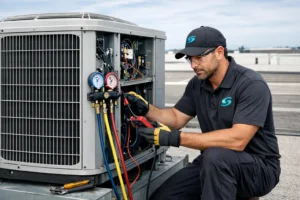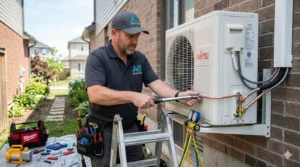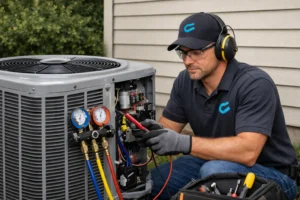

AC repair is often the first solution homeowners consider when their system starts acting up, especially during peak Florida heat. Air Mavericks provides reliable AC repair services designed to restore cooling performance without unnecessary expenses. But is repairing your unit always the smarter long-term move? This guide compares AC repair and replacement to help you understand costs, efficiency, and when each option truly makes sense for your home and budget.
Key Takeaways
- AC repair is ideal for minor issues and extending system lifespan
- Replacement offers better efficiency and long-term savings in some cases
- Frequent breakdowns often signal it’s time to replace, not repair
- Energy costs play a major role in deciding between repair and replacement
- Professional inspection is the best way to determine the right option
When Is AC Repair the Better Option Compared to Replacement?
AC repair makes the most sense when your system still has life left and the issue is isolated rather than systemic. Many homeowners jump straight to replacement, but that’s not always necessary.
Minor Component Failures
If the issue involves parts like capacitors, thermostats, or contactors, AC repair is usually quick and affordable. These components are relatively inexpensive and don’t impact the entire system’s performance long-term.
System Age Under 10 Years
Air conditioners that are less than a decade old typically benefit more from repair. Modern systems are built to last, and a single repair can restore efficiency without needing a full upgrade.
No History of Frequent Breakdowns
If your unit hasn’t needed multiple service calls recently, AC repair is often the smarter move. A one-time issue doesn’t justify the cost of replacing the entire system.
Repair Cost Is Significantly Lower Than Replacement
A common rule is the 50% guideline. If the repair cost is less than half the price of a new system, repairing is usually the better financial decision.
How Does AC Repair Compare to Replacement in Terms of Cost?
Cost is usually the deciding factor when choosing between AC repair and replacement. While repair seems cheaper upfront, long-term expenses can shift the balance.
AC repair costs typically range from minor service fees to more complex repairs depending on the issue. Replacement, on the other hand, requires a larger upfront investment but may reduce recurring costs over time.
AC Repair Costs
- Lower upfront expense
- Ideal for quick fixes
- Can become expensive with repeated issues
AC Replacement Costs
- Higher initial investment
- Improved energy efficiency
- Lower long-term maintenance expenses
In the middle of this decision process, many homeowners realize that AC repair can quickly add up if the system keeps failing. That’s why evaluating both short-term and long-term costs is critical before making a final choice.
What Are the Energy Efficiency Differences Between Repair and Replacement?
Energy efficiency is one of the biggest differences between repairing and replacing your system. Older units naturally lose efficiency over time, even after repairs.
When you choose AC repair, you restore functionality but not necessarily efficiency. A repaired unit may still consume more energy compared to a new system with updated technology.
AC Repair and Efficiency
- Restores performance but not full efficiency
- Older systems may still run inefficiently
- Higher monthly energy bills over time
AC Replacement and Efficiency
- New systems meet modern energy standards
- Lower utility costs
- Better cooling consistency
If your current unit struggles to maintain temperature or causes energy bills to spike, replacement might be the more practical long-term solution despite the higher upfront cost.
How Do You Know If Your AC System Is Too Old for Repair?
Age is one of the most important factors when deciding between AC repair and replacement. Even a well-maintained unit has a limited lifespan.
Most air conditioning systems last between 10 to 15 years. Beyond that, performance declines and repairs become more frequent.
Signs Your AC Is Too Old for Repair
- Frequent breakdowns within a short period
- Rising energy bills despite maintenance
- Inconsistent cooling throughout the home
- Use of outdated refrigerant systems
- Repair costs increasing each year
If your unit checks multiple boxes above, continuing with AC repair may only delay the inevitable. At this stage, replacement often becomes the more cost-effective and reliable solution.
Which Option Offers Better Long-Term Value for Homeowners?
When comparing AC repair and replacement, long-term value depends on your system’s condition, usage, and future plans.
AC repair is valuable for extending the life of a functional system without major investment. However, if repairs become frequent, the cost advantage disappears quickly.
AC replacement, while expensive upfront, offers benefits that compound over time:
- Reduced energy bills
- Fewer service interruptions
- Improved indoor comfort
- Higher property value
In many cases, homeowners start with AC repair but transition to replacement once the system becomes unreliable. Understanding where your system currently stands helps you make a smarter financial decision.
Conclusion
Choosing between AC repair and replacement isn’t always straightforward. AC repair is often the right choice for minor issues, newer systems, and budget-conscious homeowners. However, when repairs become frequent or efficiency drops, replacement can deliver better long-term value.
If you’re unsure which option is best for your situation, it’s worth getting expert guidance. Air Mavericks is here to help you make the right decision with honest recommendations and professional service. Call us today at (727)-431-5578 to schedule your inspection and get your system back to peak performance with the right AC repair solution.
Frequently Asked Questions
Q: How many times should I attempt AC repair before replacing my unit?
A: If your system requires multiple AC repair visits within a year, it’s usually a sign of deeper issues. Frequent breakdowns indicate declining reliability, and replacing the unit may be more cost-effective than continuing to invest in temporary fixes.
Q: Does AC repair improve energy efficiency significantly?
A: AC repair can restore proper function, but it doesn’t always improve overall efficiency, especially for older units. While repairs may fix immediate issues, outdated systems typically continue consuming more energy compared to modern high-efficiency models.
Q: Is AC repair worth it for systems older than 12 years?
A: In many cases, AC repair for systems older than 12 years provides only short-term relief. As components wear out, additional repairs become more frequent, making replacement a more practical long-term investment for reliability and performance.
Q: What is the most expensive AC repair homeowners face?
A: One of the most costly AC repair issues involves compressor failure. Since the compressor is a core component, replacing it can be expensive enough that many homeowners consider full system replacement instead of repairing it.
Q: Can regular maintenance reduce the need for AC repair?
A: Yes, consistent maintenance significantly reduces the likelihood of major AC repair needs. Routine inspections, filter changes, and system cleaning help prevent breakdowns and extend the lifespan of your air conditioning unit.