
Summers across Largo and Belleair offer zero negotiation regarding temperature. When residential spaces transform into furnaces around 2:00 PM, owners typically browse quotes determining how much to install central AC before humidity destroys personal comfort. Most Florida citizens spend roughly $7,000 up to $11,500 for complete setups serving average-sized households.
Trustworthy cooling machinery provides more than luxury; these units function as mechanical sanctuaries. Air Maverick’s expert HVAC services deliver necessary relief for families while simultaneously guarding property values.
Key Takeaways
- Load Precision: Using accurate Manual J computations stops short-cycling plus early compressor failure.
- Efficiency Increases: Switching from aged 10 SEER equipment toward modern SEER2 units slashes monthly power bills by 30%.
- Ventilation Durability: Every fresh appliance performs only as effectively as those pulmonary passages breathing air.
- Ecological Influence: Proper coolant charging inhibits atmospheric leaking alongside excessive operational tension.
Quote for Central AC Breakdown
Total square footage acts as the primary scale for thermal requirements and final equipment pricing. HVAC specialists must evaluate specific envelopes to establish required British Thermal Units (BTUs). Any machine lacking enough muscle operates constantly, eventually causing a burned-out motor. Careful load assessment remains the solitary method to bypass these pricey mechanical blunders.
Here is how each specific phase or protocol influences the total expense:
Item Category | Estimated Cost | Description |
Cooling Hardware | $4,500 – $6,500 | External condensers (A2L ready) plus interior evaporation coils or air handlers. |
Service Work | $1,500 – $2,500 | Skilled setup, chemical loading, plus required seepage evaluations for modern fluids. |
Basic Provisions | $600 – $1,200 | Fresh metallic tubing, plastic drainage, wiring whips, and wind-resistant mounting parts. |
Florida Code Req. | $250 – $450 | Storm platforms made of strengthened concrete featuring anchors meeting high-velocity regulations. |
Permits & Fees | $150 – $500 | City building documentation along with essential safety reviews and permit filings. |
Electrical Upgrades | $150 – $350 | Upgraded breakers or switch boxes if current cabling fails compatibility tests. |
Total Estimate | $7,150 – $11,500 | Overall sum preceding tax incentives or local power company refunds. |
How Do SEER2 Ratings Impact Your Initial Purchase Price?
Energy performance scores heavily influence the upfront price of machinery and its lasting investment return. The sector currently utilizes Seasonal Energy Efficiency Ratio 2 (SEER2) metrics to rank output. Although high-performance designs necessitate larger initial funding, they frequently include variable-speed components that sip wattage rather than consuming it heavily. Customers pay higher prices initially for such advanced technology, but lowering Pinellas County electricity spending typically justifies sticker values within several cycles.
What Role Does Existing Ductwork Play in the Project Estimate?
Current ventilation passages often represent a significant portion of project estimates if internal structures show compromise. Specialists examine existing distribution networks for potential holes or structural collapses. Damaged tubes force air conditioners to struggle twice as hard, effectively wasting cash inside attics.
Several historic Belleair dwellings require total tube replacement to satisfy current airflow benchmarks. These structural adjustments add massive labor hours plus supply costs while ensuring rooms stay chilly.
Why Do Largo Installation Complexities Shift the Financial Landscape?
Regional wage scales and physical hurdles during setup dictate how much to install central AC for your specific task. Experts dedicate considerably more effort toward cramped attic placements compared with basic ground-level positions. Tight crawlspaces demand unique protection protocols plus specialized instruments which expand billed duration.
Contractors generate quotes based on current inventory availability and the effort required for site access. Wiring improvements are frequent throughout older Gulf Coast properties to sustain increased power demands.
Does Manufacturer Reputation Influence the Quote?
Brand recognition directly affects longevity, component access, and warranty strength for your climate control setup. Leading companies invest millions into rigorous part verification so their machines withstand corrosive salt air. You usually provide a premium for name brands, though that figure covers superior protection for compressors and coils. Budget-friendly labels offer functional chilling at lower entry points, though they might lack the quiet operation found in high-tier models. Your selection should depend upon long-term residence intentions.
Things to Consider When Installing an AC
To maximize your financial outlay, investigate these supporting parts that protect machinery against harsh coastal conditions:
- Risk Reduction: Voltage protectors guard delicate circuit boards from Florida lightning strikes and grid variations.
- Performance Enhancers: Programmable thermostats manage daily schedules to minimize idle runtime effectively.
- Purity: Media filters or Ultraviolet (UV) bulbs eliminate particulates while preventing biological growth inside equipment.
- Durability: Start-up kits assist motors during extreme heat, whereas vibration pads minimize sound transfer through the home’s frame.
The Professional Installation Roadmap
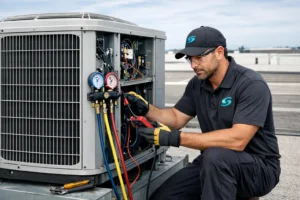
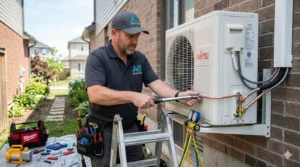
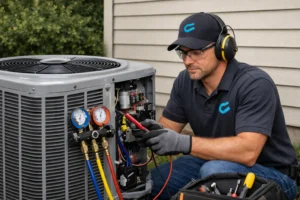
Here’s how our team usually install a central AC:
Phase 1: Precise Appraisal
Conduct a thorough property inspection and Manual J thermal load calculation. Detach old hardware following strict EPA environmental disposal rules.
Phase 2: Technical Assembly
Prepare the mounting area to ensure exterior condensers stay level forever. Place the interior evaporation coil and link it to the blower unit accurately.
Phase 3: Closed-Loop Connection
Run fresh copper tubing and execute nitrogen-shielded brazing to stop oxidation. Generate deep vacuums below 500 microns to extract moisture and non-condensable gases.
Phase 4: Calibration and Testing
Fill the setup with the exact chemical volume mandated by manufacturers. Confirm internal pressure plus wind movement to ensure the machine meets performance goals.
Expert Perspective
Pro Tip: If you reside in Belleair or near the intracoastal waterway, the salt air tax is definitely unavoidable. Standard aluminum cooling fins will corrode within seven years unless protected. Pro Advice: Request coastal coatings or Blygold treatments on your metal fins. It represents additional spending initially, but prevents rapid efficiency degradation caused by brine spray, potentially extending your setup’s life by half a decade.
Need to Install a Central AC? Let Us Help
By understanding the variables behind how much to install central AC, you can budget effectively for total comfort and avoid emergency fixes during heatwaves. Installing modern cooling hardware provides immediate lifestyle gains, ranging from cleaner air toward steady indoor climates.
Current machinery operates with significantly less noise than older ancestors, providing relief during humid nights. This renovation increases the overall market worth of your property since buyers prefer residences with efficient, updated mechanical hardware. Call Air Mavericks at 727-431-5578 to schedule your Belleair home assessment.
Frequently Asked Questions
Q: How long does a typical AC repair take to complete?
A: Most AC repair jobs can be completed within a few hours, depending on the issue. Simple fixes like replacing a capacitor are quick, while more complex problems involving refrigerant or electrical components may take longer.
Q: Can I perform AC repair on my own without professional help?
A: Basic maintenance tasks like changing filters can be done by homeowners, but AC repair involving electrical components or refrigerants should always be handled by professionals to avoid safety risks and further damage.
Q: How often should I schedule professional AC repair or inspection?
A: It’s recommended to schedule professional inspections at least once a year. Regular maintenance helps identify potential AC repair needs early and ensures your system runs efficiently throughout the year.
Q: What causes sudden AC failure during hot weather?
A: Sudden failures often result from overworked components, electrical issues, or refrigerant problems. High demand during hot weather increases stress on the system, making AC repair more likely if maintenance is neglected.
Q: Does AC repair improve indoor air quality?
A: Yes, AC repair can improve indoor air quality by resolving issues like clogged filters, mold buildup, or airflow problems. A properly functioning system helps circulate clean air throughout your home.